Reading Picture Books: A Way to Tend to your Inner Child?
Recently, I went to a local literary festival that was focused on children’s books. While my original draw to visit the festival was as a parent (it was indeed a lovely place for my kiddo to explore different books and authors), I found myself moved by many of the books. There is a tenderness and earnestness to the way that many picture books are written.
Being immersed in this space had me reflecting on something I bet many authors of children’s literature understand deeply - these books aren’t just for kids but for the inner children of adults, too.
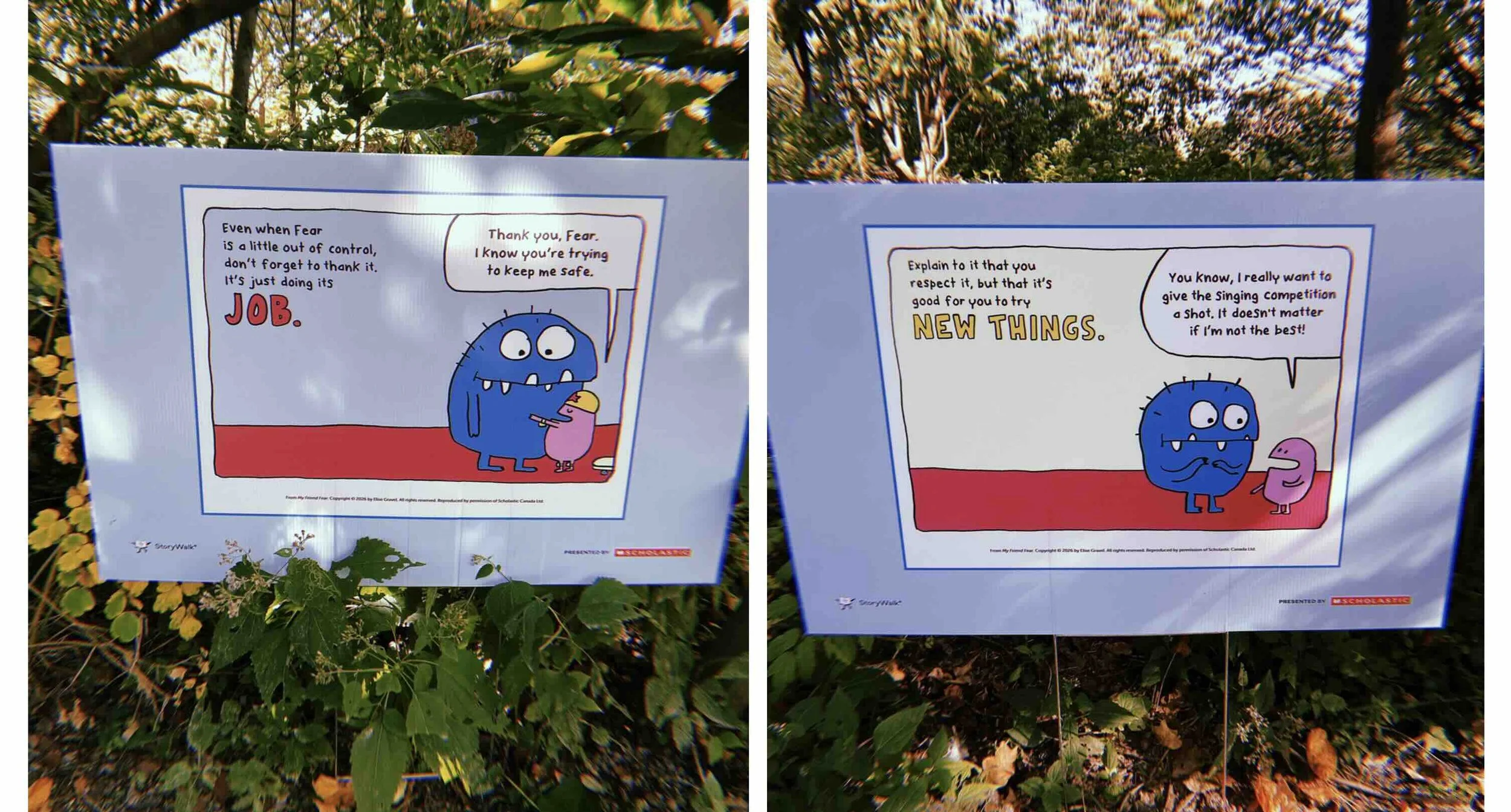
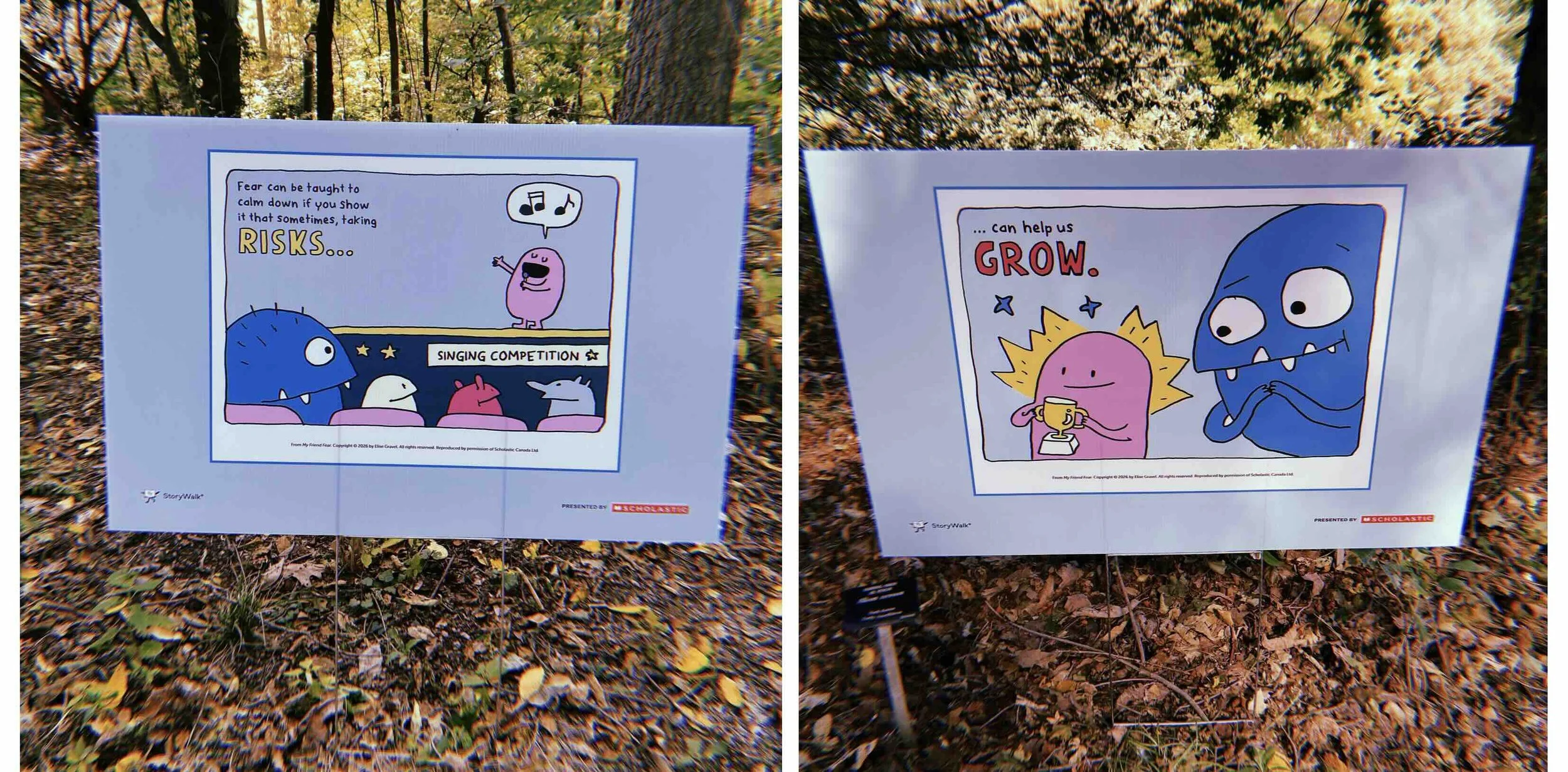
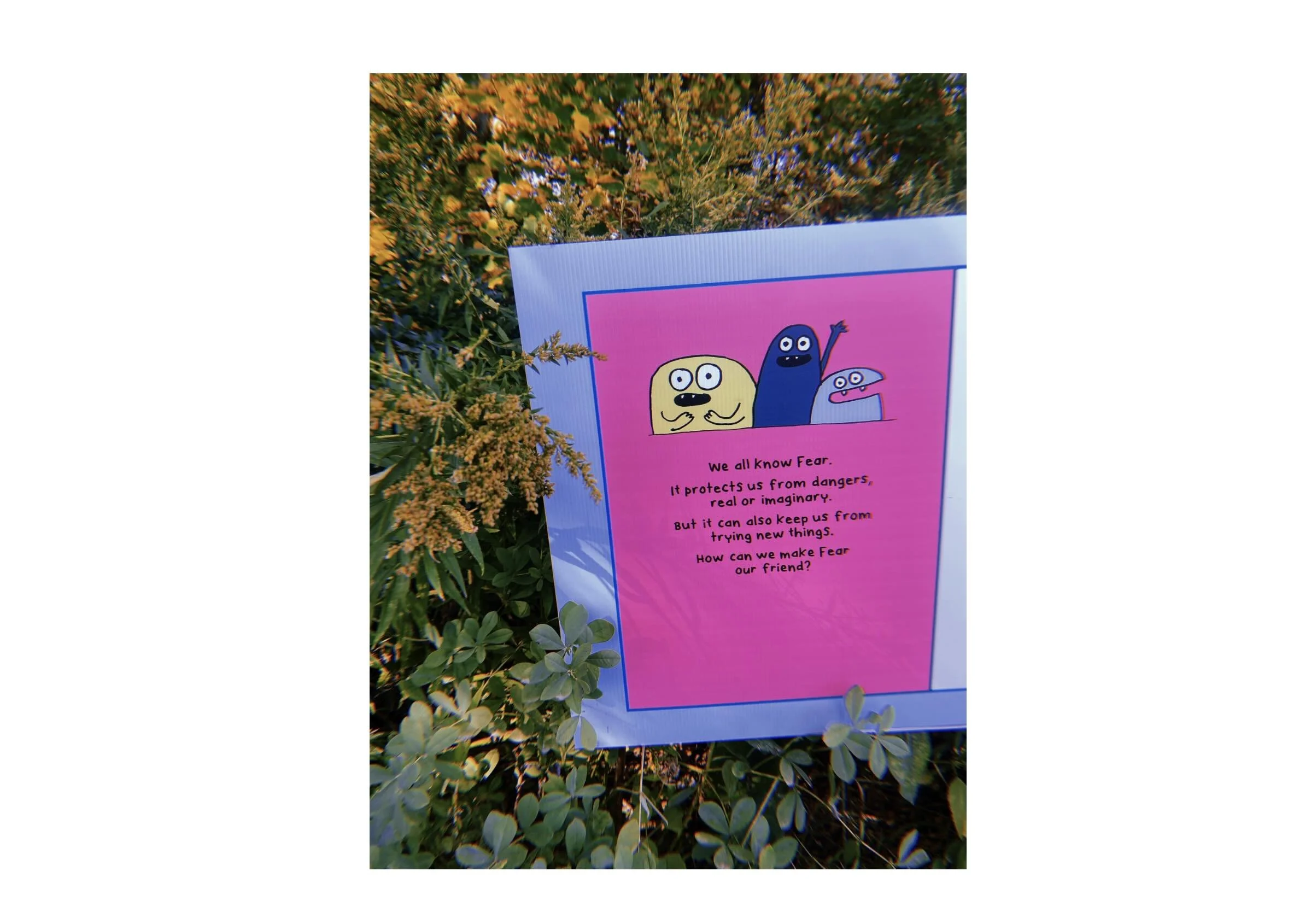
One of the activities at the festival was a self-paced nature walk where printouts from a picture book were spaced throughout the trail.
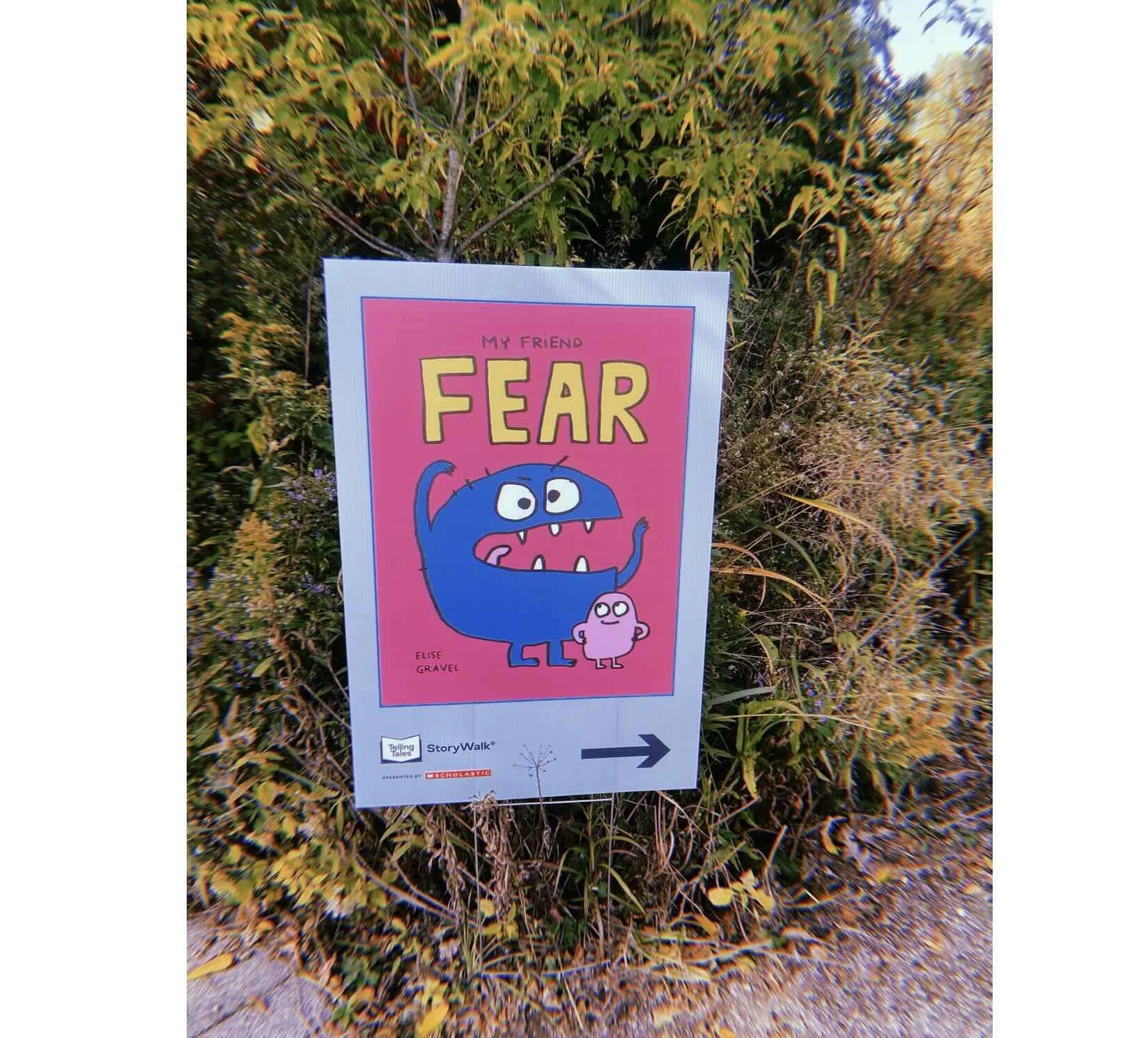
As I walked along and read the pages, I could feel the emotion of a young part of me that has been feeling hesitant to try something that’s on the edge of her comfort zone. These pages were a beautiful way to connect with her, and remind her of something that she needed to hear.
Connecting to Your Inner Child at Home
Often near the end of a therapy session, I talk with people about how they can continue to check in on a young part of themselves that we noticed or explored within the session.
For example, if the session focused on an anxious part that has been worried about an upcoming presentation at work, we might discuss ways to check in with that part before and after the presentation. If a part has been feeling overwhelmed, we might discuss making time for practices that soothe this part – perhaps going for a walk or drinking tea while sitting with a weighted blanket. If the session focused on exploring a big life transition or upcoming decision, we might assign a time of the day, like after brushing your teeth each morning, to take a quick poll from different parts to see notice any feelings, worries, or curiosities they have that day.
However, it can be hard sometimes to know what your parts need, let alone how to connect to them.
When we explore ways to connect that feel fun, interesting, or creative, it can help us come to the connection from a place of openness and curiosity.
Here is an invitation inspired by my picture book nature walk:
Practice Invitation: Building a Resource Library (one book at a time)
Visit your local library or bookstore. Allow yourself to be guided by your curiosity or interest.
Draw awareness to your feelings and sensations. Get curious - is there a theme, book, or visual style that brings a positive feeling? It could be a feeling of ease, curiosity, comfort, calm, playfulness, warmth, openness, creativity, connectedness, or simply a neutral feeling.
Check them out from the library, purchase them, or write down the specific phrases/images that bring the positive feeling.
Set aside a few minutes each day (or whichever time period feels right to you - each week, every other morning), and read these pages (in your head or out loud) as if you are speaking to those parts in the present.
Notice what it is like to read this book as your present-day, adult self, connecting to a young part who is brought ease, calm, playfulness, neutralness from these words or images. Do any feelings or sensations arise? Perhaps a warmth, calm, protectiveness, ease, opening?
What if I feel sadness, grief, anger or another emotion I wasn’t expecting?
When we connect to young parts, there can be a feeling of sadness, grief, or anger (for example) about needs that were not met. Or, sometimes what feels positive for one part feels uncomfortable or scary for another. Know that’s completely normal. And, listen to your feelings and body. If the sadness, grief, or anger feels like too much, take a break from the activity, or stop altogether. Come back to something that feels resourcing. A cup of tea. A walk. Talking with someone who you trust or sitting with a pet or a plant or the blue sky. (Feel free to visit my moments of calm resource library if you think some calming nature videos could be nice.)
Know that feeling any of these emotions are not wrong or bad and don’t mean that you were doing the activity ‘wrong’ - actually, the act of noticing and naming emotions that arise is fundamental in getting to know yourself and your parts better. So, if you noticed that difficult emotions arose, or if you noticed that you began to disconnect, you’re also doing the activity just as it was meant to be done!
In IFS (Internal Family Systems), points of difficult or unexpected feeling, sensations, or emotions are called trailheads - they can be a guidepost of a theme or focus to return to within a therapy session. Trailheads often give clues about what a young part needs, or what needs were not met in the past. In this way, though trailheads can be difficult in the moment to experience, it’s also neat to know that they can be a path to understand yourself and your parts better and help them integrate into the present day.

About the Author
Sabrina Sibbald (MSW, RSW) is a Registered Social Worker and Psychotherapist. She supports adults in Burlington, Toronto, and across Ontario to overcome anxiety, people pleasing, and trauma so they can move forward in a way that feels true to who they are.
__
This post was written by a human – no AI was used in the writing of this post :)
In this new year of writing, I’m making a new habit of letting you know when a blog post was written with/without AI – going forward I’ll note this.
__
Please note that this blog post reflects the author’s perspective is not a substitute for individual therapy or support. If you need immediate support, please connect with your local crisis support (such as calling or texting 9-8-8 within Canada) or emergency services (such as 9-1-1).